The simple things that trip beginners up — and how to keep herbs alive and thriving
Herbs are one of the easiest ways to start growing something useful for your kitchen.
They grow well in pots.
They don’t need much space.
And they show up in dinner far more often than people expect.
But there are a few mistakes almost every new herb gardener makes at the beginning.
Most of them come from a good place — trying too hard to take care of the plant.
The good news is they’re all easy to fix once you know what’s going on.
1. Overwatering
This is the biggest one.
Hands down.
Most beginners treat herbs like thirsty houseplants that need a drink every day. The soil looks dry on top, so the watering can comes out again.
Before long the roots are sitting in a swamp.
The leaves turn yellow.
The stems get mushy.
The plant looks wilted even though the soil is soaking wet.
That’s root rot.
Herbs — especially Mediterranean ones like thyme, oregano, and rosemary — actually prefer soil that dries out a little between waterings.
The easiest way to check is simple.
Stick your finger into the soil about an inch deep.
If it’s dry, water.
If it’s still damp, leave it alone.
Let herbs get a little thirsty. They grow stronger roots and better flavor that way.
2. Not Enough Sun
Most herbs love sunlight.
A lot of it.
Four to eight hours of good sun each day is ideal.
When herbs don’t get enough light they start stretching toward it. The stems get long and weak, the leaves get smaller, and the flavor fades.
If you’re growing herbs inside, place them in the brightest window you have — usually a south-facing window.
Outside, a sunny porch or step works beautifully.
The more sun they get, the happier they are.
3. Starting Too Big
This is where most beginners get overwhelmed.
They go to the garden center and come home with six or eight different herbs.
Suddenly there are pots everywhere.
Different watering needs.
Different growth habits.
Plants bolting or drooping.
It quickly starts to feel like another chore.
The better approach is to start ridiculously small.
One pot.
Maybe two.
Chives and mint are perfect starters. Or parsley and thyme.
Get those growing well first.
Once you see how easy herbs can be, you’ll naturally want to add another one later.
Small is not failure.
Small is smart.
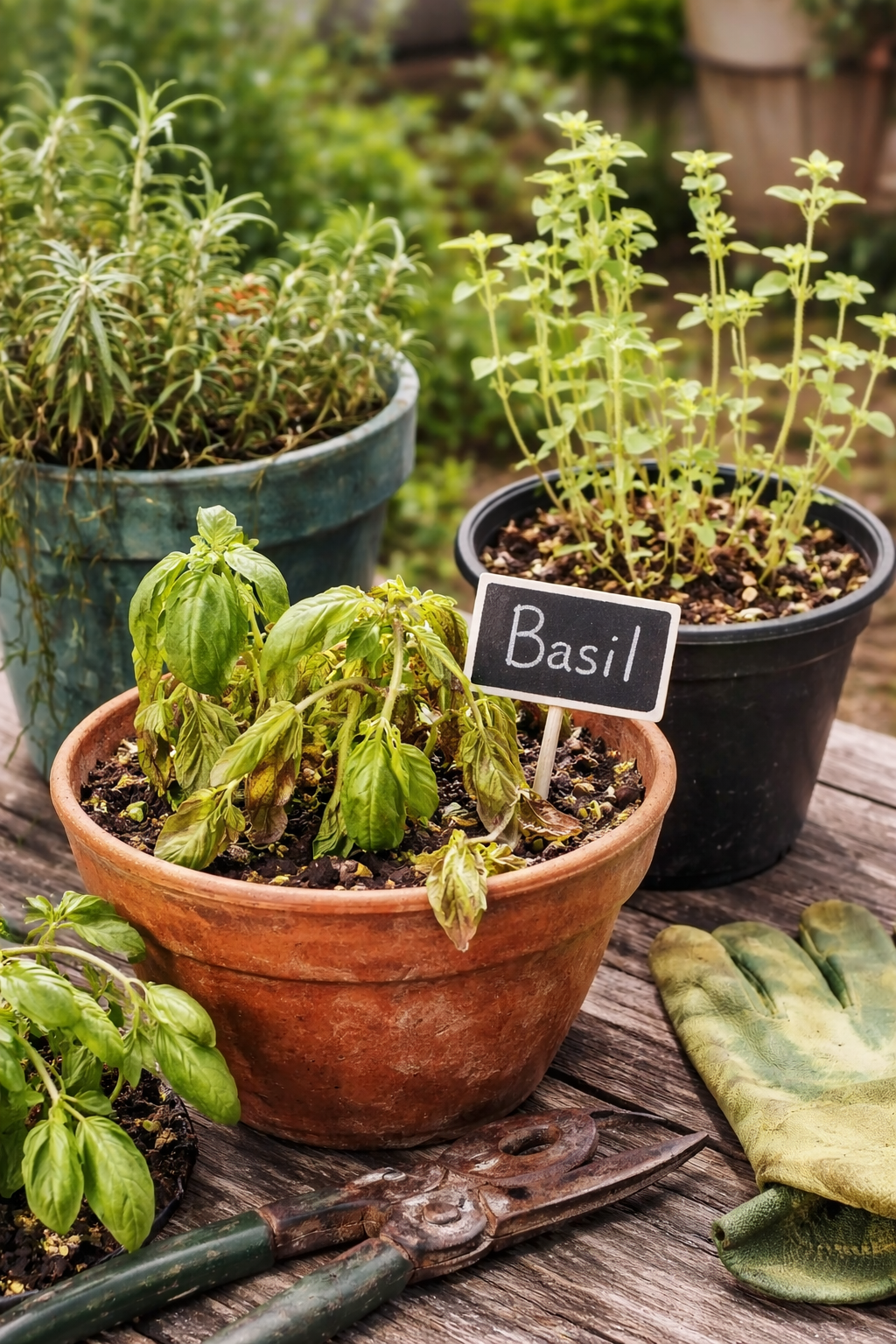
4. Basil Trouble
Poor basil.
It’s the herb everyone wants first — because pesto, pizza, and fresh tomatoes immediately come to mind.
But basil can be a little dramatic.
It hates cold temperatures.
Anything below about 50°F can turn the leaves black overnight.
It also bolts quickly when it gets stressed or too hot, sending up flowers and turning the flavor bitter.
A lot of beginners think they’ve done something wrong when basil suddenly looks unhappy.
Usually it just needs:
- steady warmth
- plenty of sun
- consistent (not soggy) watering
Once you understand that, basil becomes much easier to grow.
5. Not Harvesting Enough
New gardeners are often afraid to cut their herbs.
They want the plant to grow bigger first.
But herbs actually grow better when you use them.
Snipping regularly encourages the plant to grow fuller and bushier.
Basil especially loves this. If you pinch back the tops and remove flowers, it will keep producing leaves all season long.
Some of my basil plants end up looking like little green bushes by late summer.
Use them often. That’s what they’re there for.
The Small Moments That Make It Worth It
One of my favorite moments with herbs happens in the morning while breakfast is cooking.
There’s a small pot of chives sitting on the kitchen windowsill.
While scrambling eggs, I reach over, grab a handful of the green blades, and snip them with kitchen scissors right into the pan.
Five seconds.
Bright green flecks across yellow eggs.
The grandbabies are coloring at the table, someone’s asking for more juice, and there’s probably a little remodel dust still floating around somewhere.
But those fresh herbs make the whole plate feel special.
The same thing happens when I step out to the porch and snip basil for dinner, or grab mint to drop into a jar of sun tea with lemon slices.
Those little moments are what herb gardening is really about.
Not perfection.
Just something growing close to the kitchen that makes everyday meals feel a little more like home.
— Ronda
Thyme on the River