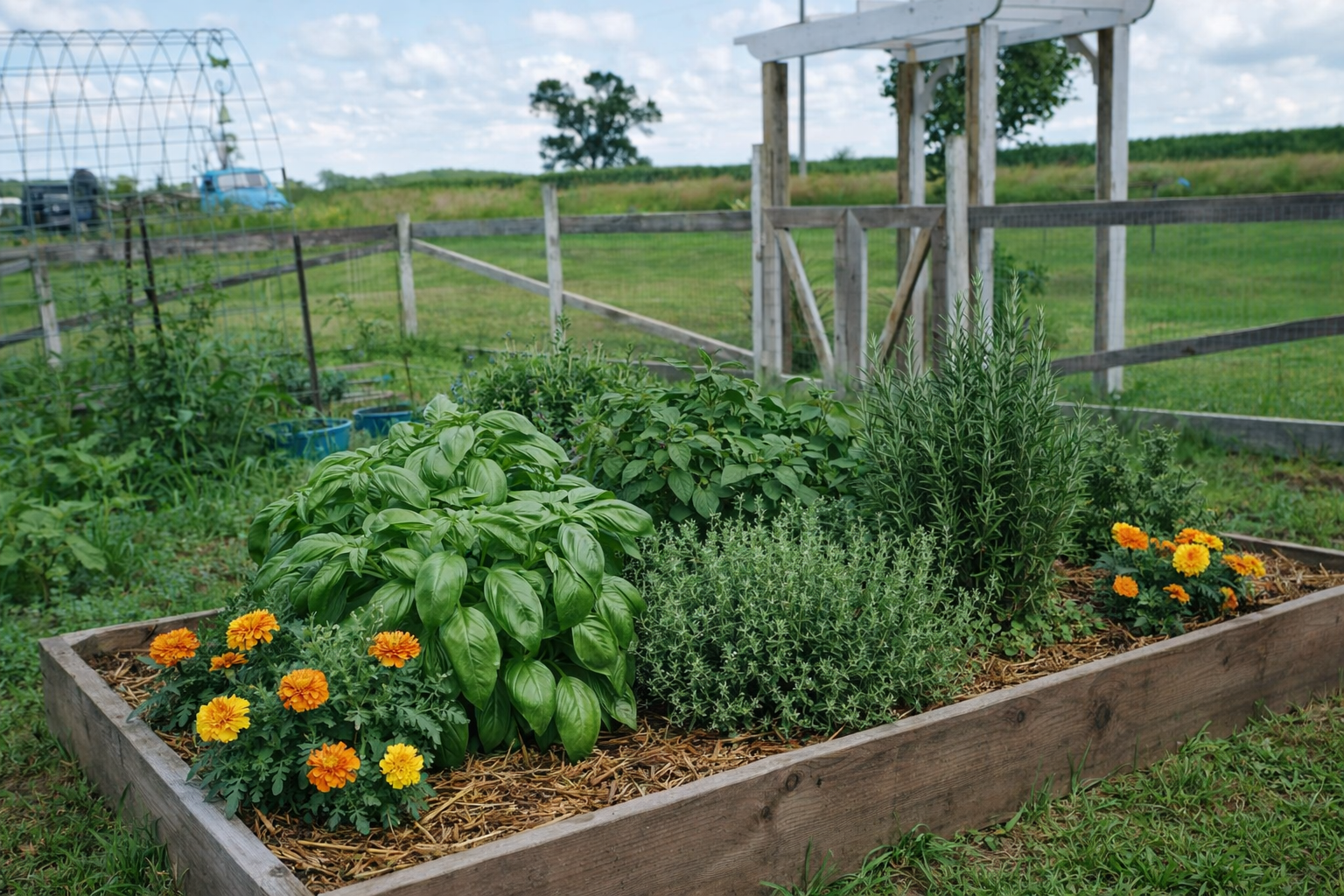
The small garden that quietly feeds your kitchen and your medicine cabinet
If someone asked me what the most useful thing to grow in a garden is, I wouldn’t start with tomatoes.
I’d start with herbs.
Herbs are one thing almost anyone can grow successfully, even in a small space, and they end up in the kitchen more often than people realize.
Around here, herbs show up in dinner constantly.
Basil in homemade pizza sauce.
Oregano in taco or fajita seasoning.
Cilantro in homemade pico de gallo.
Dill on deviled eggs instead of paprika.
Thyme and oregano in almost everything.
Very few meals leave this kitchen without some kind of herb in them.
And the best part is they’re easy to grow.
You don’t need a big garden to start.
A few herbs can completely change how you cook and how your kitchen feels.
These are the herbs I reach for the most.
Basil
Basil gets used so much here that I grow it in several places.
It grows in the garden beds, but I also keep pots of it closer to the house because we use it constantly.
Basil is one of those herbs that rewards you for using it.
The more you pinch it back, the bushier it grows. I also pinch off the flowers through the summer so the plant keeps producing leaves. By the end of the season the basil plants start looking more like bushes than herbs.
In the kitchen it ends up in things like pizza sauce, pasta dishes, and fresh summer meals.
Medicinally basil has long been used for things like stress relief, digestion, and supporting the immune system.
Oregano
If there’s one herb that shows up in my cooking constantly, it’s oregano.
It goes into taco seasoning, fajita seasoning, pasta sauces, and a lot of everyday meals.
It’s also excellent sprinkled over grilled zucchini or yellow squash slices during the summer.
Oregano is one of the strongest medicinal herbs you can grow. It’s naturally antibacterial, antiviral, and antifungal.
Traditionally it’s been used for things like colds, respiratory infections, digestive support, and immune health.
But most days in my house, it simply ends up in dinner.
Thyme
Thyme is one of those herbs that quietly ends up in almost everything.
It works in soups, meats, roasted vegetables, potatoes, and sauces.
Medicinally, thyme has a long history of supporting respiratory health. It’s often used in teas for coughs, congestion, and sore throats because of its antimicrobial and expectorant properties.
But like most herbs in this garden, it serves both purposes — flavor and support.
Dill
Dill is one of those herbs that makes certain dishes instantly recognizable.
Around here it usually ends up on deviled eggs, especially since I switched from paprika to dill weed on top.
It also gets used in my homemade ranch dressing and dip seasoning mix.
Dill has traditionally been used to support digestion, helping with things like gas, bloating, and indigestion.
It’s a simple herb, but a useful one.
Chives
Chives are one of the easiest herbs you can grow.
Once they’re established, they come back year after year.
During the growing season I use them fresh, but I also dehydrate a lot of them in my dehydrator so we can use them through the colder months.
Chives belong to the same family as garlic and onions, so they share some of the same beneficial compounds that support heart health, immunity, and inflammation control.
But most days they’re simply another herb that ends up on dinner.
Cilantro
Cilantro tends to be one of those herbs people either love or hate.
I love it.
It shows up most often when we make fresh salsa or pico de gallo, bringing that bright flavor that makes those dishes work.
It also ends up in pineapple-cilantro-onion relish for grilled salmon.
Traditionally cilantro has also been used to support digestion and detoxification, particularly in helping the body process heavy metals.
It’s bright, fresh, and perfect for summer cooking.
Rosemary
Rosemary is one of the more stubborn herbs in a Midwest garden.
It grows beautifully during the season, but harsh winters can sometimes take it out. Where I live temperatures can drop below zero for weeks at a time, and rosemary doesn’t always survive that kind of cold.
Still, it’s worth growing.
Rosemary has long been associated with memory, focus, circulation, and digestion. It’s also used for headaches and muscle pain.
In the kitchen it brings a strong, earthy flavor to roasted meats and vegetables.
One More Herb I Wouldn’t Garden Without
German chamomile isn’t always listed in kitchen herb lists, but it’s one I harvest every year.
The flowers get picked before they fade, and I leave some behind so they reseed and come back again.
Chamomile tea has become a nightly ritual for me. It’s one of the most widely used calming herbs, traditionally used to support sleep, digestion, and relaxation.
Thanks to menopause, sleep doesn’t always come easy anymore.
Chamomile helps.
Fresh in Summer, Dried for Winter
During the growing season most of these herbs get used fresh.
But as the season winds down I dry almost all of them and store them in jars so they last through fall and winter.
It’s a simple system.
Fresh herbs while the garden is producing.
Dried herbs once the cold returns.
Start Small
You don’t need a huge herb garden.
Even a few plants can change the way you cook.
Herbs are one of the easiest ways to start growing food that actually gets used in the kitchen.
They add flavor, support health, and make everyday meals better.
And once you start growing them, you’ll wonder how you ever cooked without them.
— Ronda
Thyme on the River 🌿