Simple herbs that grow where real life happens
If you’re feeling overwhelmed about starting a garden, take a breath.
You don’t need a big garden.
You don’t need perfect soil.
And you definitely don’t need one of those Pinterest-perfect setups.
Herbs are one of the easiest, most forgiving ways to start growing something useful for your kitchen.
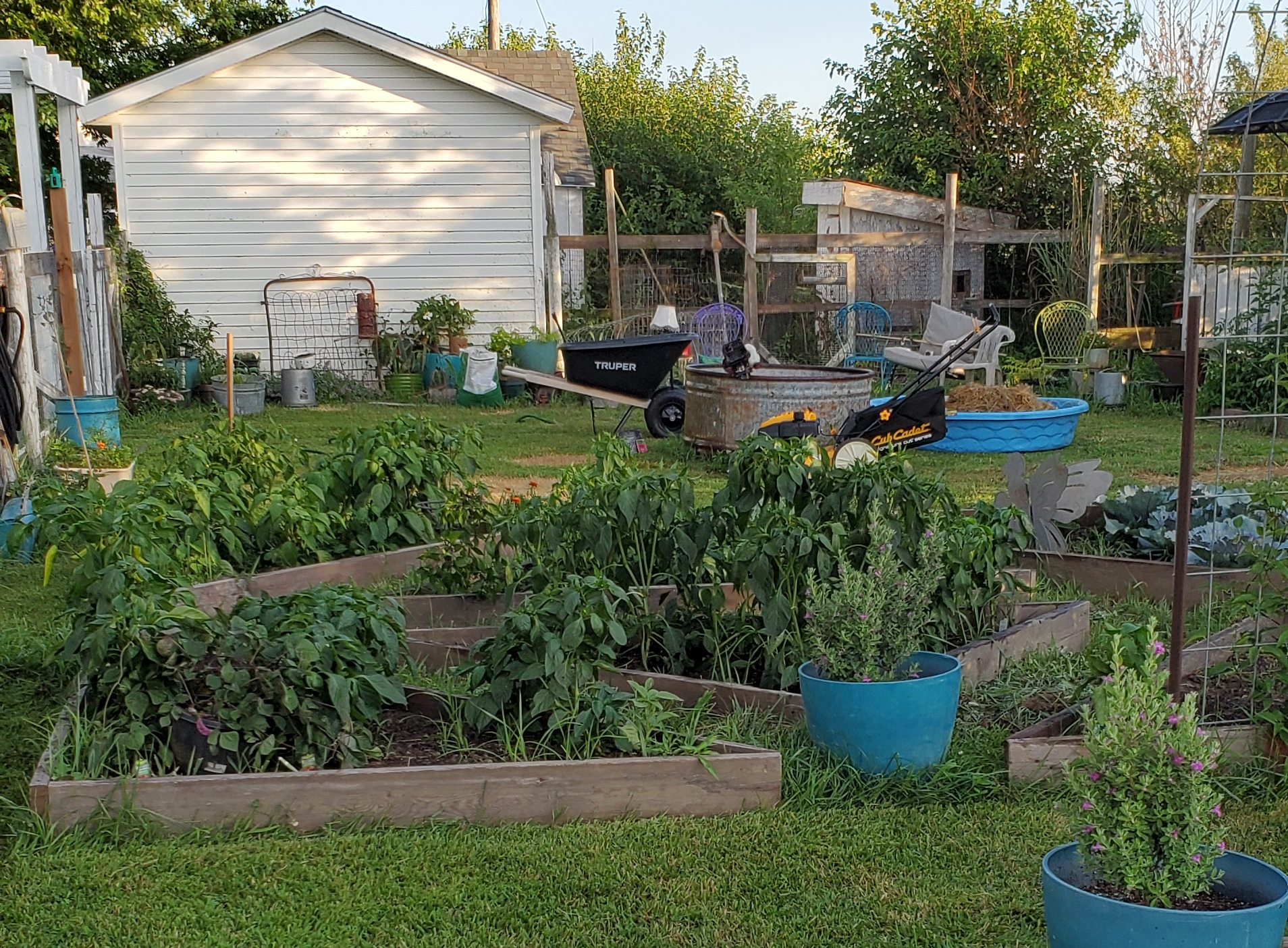
Around here at Thyme on the River, herbs grow wherever they fit into real life.
Some grow in the garden beds.
Some grow in pots by the front door.
A few live in pots right in the kitchen.
Honestly, if I have a place to set a pot, there’s probably an herb growing there.
Because the truth is, herbs get used constantly in this house.
Where My Herbs Actually Grow
Right now most of my herbs live in a mix of spots that fit our everyday life.
Nothing fancy. Just practical.
Pots on the porch and steps
This is where most of the herbs live during the growing season.
Terracotta pots, plastic pots, whatever I have on hand. Usually 6–12 inches wide with good drainage.
They sit along the sunny porch or back steps where they get plenty of light.
That makes it easy to step outside while dinner is cooking, snip what I need, and walk right back inside.
This is where herbs like:
- basil
- dill
- parsley
- chives
- cilantro
- mint
usually grow.
Mint always gets its own pot because it will absolutely try to take over everything.
Windowsill herbs in winter
When Midwest winter hits and everything outside freezes solid, a few herbs come inside.
Usually just a small group on the brightest kitchen windowsill.
Basil, parsley, chives, and mint handle indoor life pretty well if they get enough light.
Sometimes I add a small grow light when winter days get gray.
Nothing huge. Just a few pots so I can still grab fresh herbs for eggs, soups, or tea without going outside in the snow.
The little greenhouse out back
We also have a small greenhouse near the chicken coop.
Nothing fancy.
It’s mostly used for starting seeds early in spring or keeping a few herbs alive through colder weather.
Basil and dill often get their start here before moving outside.
Sometimes rosemary or thyme will overwinter here if the winter gets too harsh.
A few herbs planted in the ground
Some herbs eventually find a permanent home in the yard.
Things like:
- thyme
- oregano
- chives
These come back year after year once they’re established.
They’re tough, low maintenance, and handle our Midwest weather pretty well.
It’s not a big garden plot. Just little pockets around the yard where herbs fit naturally into the space.
The Easiest Herbs for Beginners
If someone asked me where to start, I’d keep it simple.
You don’t need ten herbs.
Start with two or three.
These are the ones I think are almost impossible to mess up.
Chives
Probably the easiest herb you can grow.
They grow like a mild green onion and come back every year.
You can snip them with scissors whenever you want and they just keep growing.
They show up constantly in our kitchen on:
- eggs
- potatoes
- soups
- salads
Mint
Mint practically grows itself.
Sometimes a little too well.
That’s why I always keep it in its own pot.
It’s perfect for:
- tea
- fruit salads
- yogurt
- flavored water
And it comes back strong every year even after rough Midwest winters.
Parsley
Parsley is one of the most underrated herbs in the kitchen.
It’s easy to grow and incredibly useful.
A handful of chopped parsley can brighten soups, rice, roasted vegetables, or grilled meat.
Flat-leaf Italian parsley is my favorite for flavor.
Thyme
Thyme is one of those herbs that quietly makes everything taste better.
It loves full sun and well-drained soil and once established it doesn’t ask for much.
It’s great for:
- soups
- roasted chicken
- potatoes
- eggs
And it comes back year after year.
Pots or In the Ground?
Honestly?
Either one works.
Herbs are pretty forgiving.
But for beginners, pots are usually easier.
Pots let you:
- move plants to follow the sun
- bring them inside during frost
- control the soil and drainage
- keep aggressive herbs like mint contained
And if something doesn’t work out, it’s just one pot to replace instead of digging up part of the yard.
The biggest thing to remember is simple:
Don’t overcrowd the roots and make sure the pot drains well.
Herbs hate soggy soil.
The Most Common Beginner Mistake
The biggest mistake new gardeners make is simple.
They try to grow too much.
Too many plants.
Too many varieties.
Too many rules.
Herbs don’t need that.
Start with a few.
Learn how they grow.
Watch how they behave through the season.
Then add more if you want.
That’s how most herb gardens grow naturally anyway.
How Herbs Show Up in My Kitchen
Fresh herbs don’t need complicated recipes.
They just quietly show up in everyday cooking.
Basil goes into pasta sauce or gets torn over fresh tomatoes.
Dill lands on eggs or potato salad.
Parsley gets chopped into soups and rice.
Chives get snipped over just about everything.
Thyme goes into roasts and stews.
Most of the time it’s as simple as stepping outside, grabbing a handful, and tossing it into whatever is cooking.
That little bit of green changes the whole dish.
Fresh in Summer, Dried for Winter
During the growing season I mostly use herbs fresh.
But toward the end of summer I dry a lot of them so they last through winter.
Usually I just bundle them and hang them to dry the old-fashioned way.
Sometimes I use a dehydrator.
Once they’re dry they get stored in jars in the cupboard.
It’s like bottling up summer for those long Midwest winters.
Start Small
You don’t need a big herb garden.
You don’t need ten varieties.
Start with two or three herbs you already use in your cooking.
Put them in a couple pots near your kitchen door.
Snip a little when you cook.
Before long you’ll realize those little plants are showing up in dinner almost every day.
And that’s usually how herb gardens begin.
Small. Simple. And useful.
— Ronda
Thyme on the River