Big garden dreams are easy in spring.
The gardens that survive summer are usually the ones built to fit real life.
Every spring the same thing happens.
The weather softens.
The days stretch a little longer.
Seed catalogs show up in the mailbox and suddenly garden plans start growing faster than the garden itself.
Rows of vegetables.
Twenty different varieties.
Big beautiful layouts that look impressive on paper.
Most beginners don’t fail at gardening because they can’t grow things.
They fail because they try to grow too much.
Rows of vegetables they don’t even eat.
Plants that struggle in their region.
Crowded beds where everything competes for water, nutrients, and space.
Then July arrives.
The heat hits.
Weeds explode.
Rain disappears for a while and suddenly watering becomes a daily job.
If you have kids in sports or summer activities, or you’re working full time, the garden you were excited about in March can start feeling like another responsibility you can’t keep up with.
That’s when many gardens quietly get abandoned.
Not because people don’t care.
Because life got busy and the garden was simply too big to sustain.
The gardens that survive July usually start smaller
After years of trying to keep a huge garden myself, I learned something simple.
The gardens that keep feeding you in July and August are usually the ones that started small and realistic in March.
Now my garden revolves around the things we actually use.
Herbs first.
Basil.
Thyme.
Oregano.
Cilantro.
Chamomile.
The herbs I cook with.
The herbs I use for tea.
The herbs I use for medicine.
Many of these herbs will keep producing through summer heat if you pinch them regularly and give them good morning sun.
Then I add a few vegetables we eat constantly.
Tomatoes are non-negotiable for me.
I hate store tomatoes.
They always taste like nothing.
But a fresh garden tomato, warm from the sun?
That’s a completely different thing.
Peppers are another must.
Every year I grow herbs, tomatoes, and peppers. Some years I add cucumbers or a few other vegetables, but those core plants always come first.
Because I know we’ll actually eat them.
Start with what you’ll actually use
If someone tells me they want a garden but they’re afraid of failing, I always tell them the same thing.
Start small.
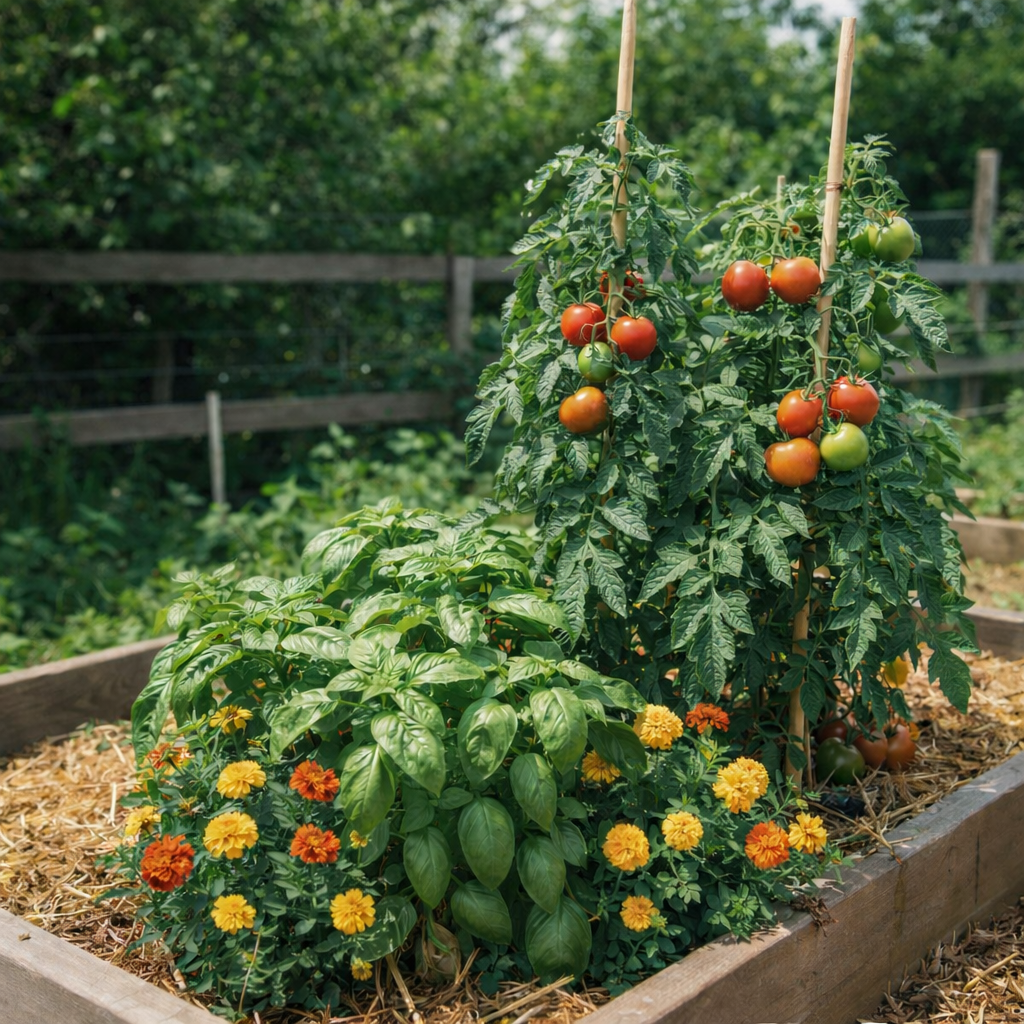
One raised bed is enough.
Plant a couple tomato plants.
Tuck basil around them — its strong aroma helps repel common tomato pests like aphids, whiteflies, thrips, flies, mosquitoes, and even hornworms. Many gardeners also believe basil improves the flavor of nearby tomatoes. Whether it’s shared soil nutrients or simply long-standing garden wisdom, a lot of people notice the difference.
Add a few marigolds too.
French marigolds are especially useful in vegetable beds. Their roots release natural compounds that help repel soil pests like root-knot nematodes, while their bright blooms attract pollinators like bees and butterflies. They also draw in beneficial insects like ladybugs that help keep pest populations under control.
Suddenly that little bed is doing a lot of work for you.
Tomatoes growing strong.
Basil helping keep pests away.
Marigolds drawing in the good insects that protect the garden.
And now you’ve got everything you need for fresh bruschetta from your own garden.
Tomatoes.
Basil.
A bit of garlic.
A little olive oil and salt.
There is nothing better than food you grew yourself.
Fresh tomatoes and basil picked minutes before dinner taste like summer in a way the grocery store never can.
Small gardens still count
If space is limited, containers work beautifully too.
You can grow herbs in pots near the kitchen.
I’ve even grown cherry tomatoes in a container by the front door. When they start ripening, you can walk by and grab a snack on your way in or out.
Containers do dry out faster than garden beds, so they need consistent watering, but placing them somewhere you pass every day makes that easy.
Little things like that are what make gardening part of everyday life instead of a giant project.
Build the garden you can sustain.
That’s the one that feeds you.
🌿 If you enjoy grounded writing about small gardens, simple food, herbs, and everyday home life, follow Thyme on the River so new posts find their way to you.
You don’t need to do everything.
Just begin.