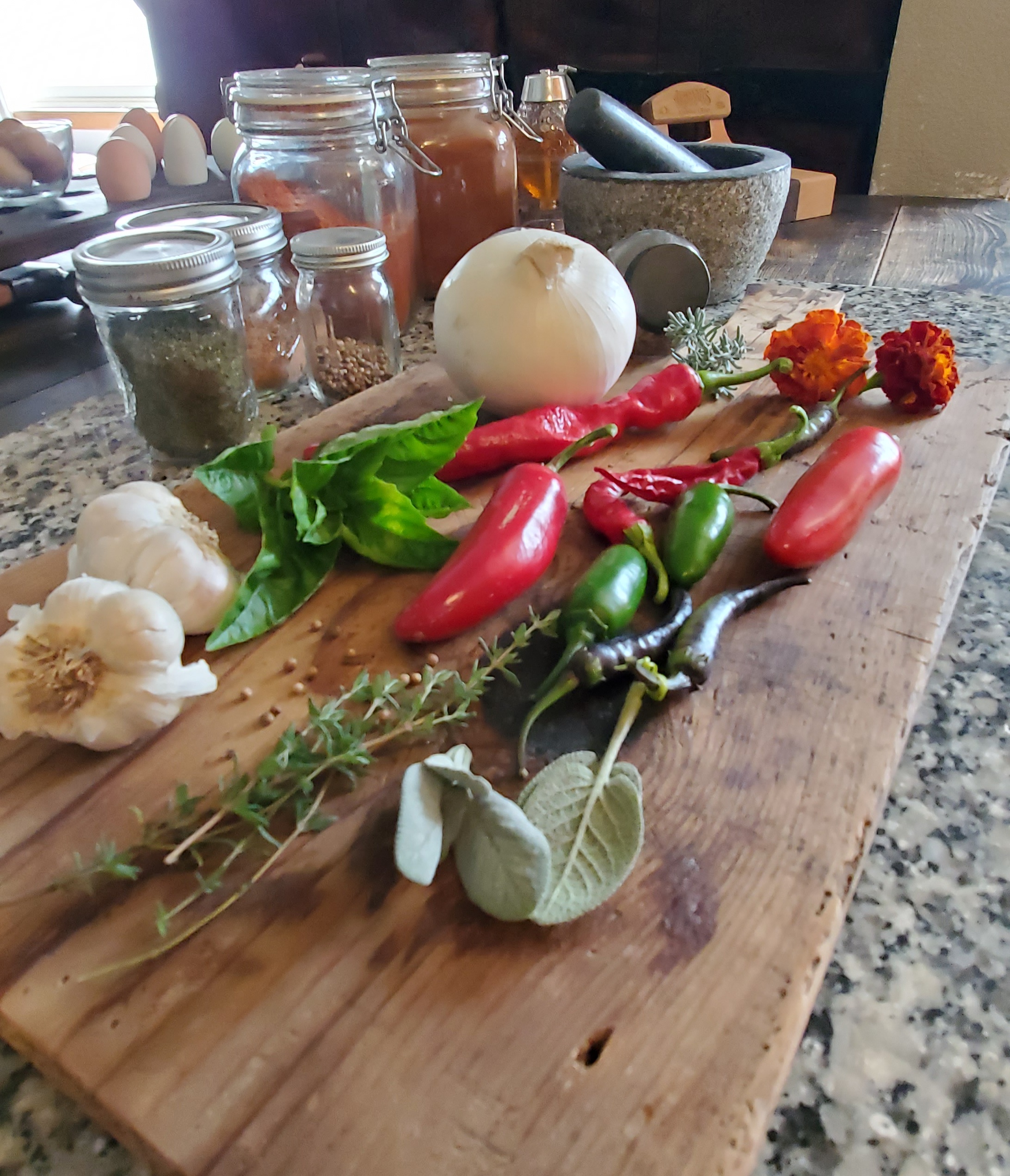
There are two kinds of cooks in this world.
The ones who level off every teaspoon, follow the recipe like scripture, and set timers down to the minute.
And the ones who cook with their hands, trust their senses, and know a dish is right when the kitchen smells like home.
I’ve always been the second kind.
I don’t skip measuring because I’m trying to be rebellious or fancy. It’s simply the way cooking has always lived in me. Some of it came from standing beside my mama in the kitchen as a little girl. Some of it came later—learning through necessity, repetition, and years of feeding the people I love.
When You’ve Cooked Long Enough, Your Hands Remember
You learn what a generous pinch looks like. You know when a sauce needs another splash of stock, when the soup needs more depth, when the dough feels just right under your fingers.
Your eyes, nose, and taste buds become part of the recipe too.
That doesn’t mean recipes are useless.
When I try something brand new, I usually follow the recipe the first time. That’s how you learn the bones of a dish. But after that, it turns into a conversation instead of a command.
I adjust. I add. I leave things out. I make it fit the people sitting at my table that night.
A Recipe Should Serve Your Family
Your family should never have to serve the recipe.
Some homes love heat and spice. Some want it mild. Some need simple ingredients on a tight budget. Some families need meals that stretch. Some just want food that tastes like comfort after a long day.
Good cooking leaves room for real life.
That’s how the best family favorites are born—not from perfect measurements, but from heart, practice, and a little trial and error.
Cooking Confidence Is Learned
Too many people believe cooking is something you’re either born knowing how to do—or you’re not.
Too many feel intimidated before they even start.
You don’t need perfect skills or expensive tools.
Cooking is learned.
Confidence is learned.
Taste is learned.
One meal at a time.
I’ve watched it happen in my own family—the person who once stayed out of the kitchen eventually becomes the one asking questions, tweaking recipes, and feeding their own loved ones with quiet confidence.
That’s how traditions stay alive.
If You Need Permission to Stop Overthinking Dinner
Start where you are.
Use the recipe as a guide if it helps.
Change it when it needs changing.
Trust your senses.
Trust your practice.
And if the recipe calls for one teaspoon of garlic?
Add garlic until your ancestors tell you to stop.